BRITISH MUSICAL HISTORY AND INTERNATIONAL ACOUSTIC SCIENCE · MUSIC
Tuning-fork study
What it means: The documented association is pitch comparison and the exchange between music and acoustic science. Historical pitch labels are not silently equated with a modern frequency; no therapeutic tradition or universal emotional effect is asserted.
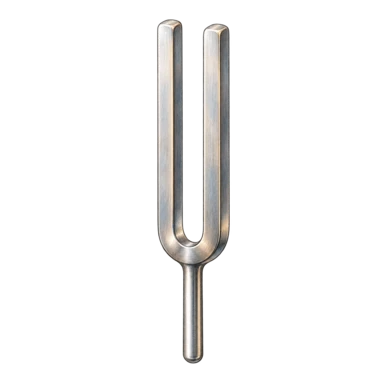
The Science Museum preserves a steel tuning fork made in Sheffield in the nineteenth century and marked with a historical pitch name. Smithsonian and Whipple accounts describe how this two-pronged resonator served musicians as a pitch reference and later scientists studying sound. The new unmarked fork represents that functional form without pretending to reproduce a calibrated historical instrument. The documented association is pitch comparison and the exchange between music and acoustic science. Historical pitch labels are not silently equated with a modern frequency; no therapeutic tradition or universal emotional effect is asserted.
A modern invitation to find a steady note before beginning.
Often chosen for: Peace, calm & comfort
Respectful use: The museum photo is CC BY-NC-SA 4.0 and is inspection-only; no maker inscription or exact specimen surface is copied. Whipple direct retrieval returned HTTP 403 and its official indexed text is labelled as such in the evidence ledger. No calibration, frequency benefit, diagnosis, treatment or universal calming claim. This is an original generated decorative study, not an exact map, site survey, historical artifact replica or operating guide. Blue and gold are editorial colors. No institutional or community endorsement is claimed. No blanket commercial or manufacturing clearance is claimed.
Sources: [1] collection.sciencemuseumgroup.org.uk [2] americanhistory.si.edu [3] whipplemuseum.cam.ac.uk