MIDDLE EAST AND NORTH AFRICA · OBJECTS
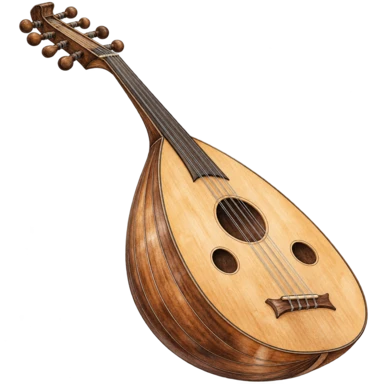
Oud-inspired plain lute study
What it means: Modern editorial interpretation: Make room for the voice beside yours.
The oud is a short-necked lute with a pear-shaped body and a curved back built from thin wooden strips. UNESCO describes its use alone or in ensembles and transmission through apprenticeship and music education. The Met’s Syrian example is dated 1925. Its broad musical geography should remain visible: the Iran–Syria inscription does not make the instrument exclusive to those two countries.
Make room for the voice beside yours.
Often chosen for: Luck, joy & celebration · Friendship & connection
Respectful use: An original plain instrument study with unornamented sound holes. No named maker’s rosette, musical recording or cultural-authenticity claim is included. The oud’s geography extends beyond the two countries of the cited UNESCO inscription. This is an original generated decorative preview, not exact specimen or functional-object documentation. Source links support the subject or process, not emotional meanings. Blue and gold are editorial colors. No blanket commercial or manufacturing clearance is claimed.
Sources: [1] ich.unesco.org [2] metmuseum.org [3] ich.unesco.org