CHINESE AND JAPANESE MUSEUM CONTEXTS, KEPT DISTINCT · OBJECTS
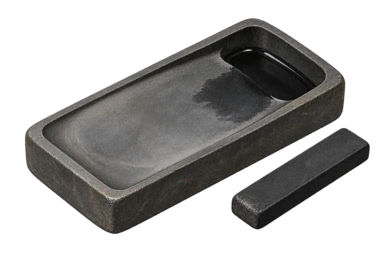
Inkstone and inkstick preparation study
What it means: Chinese desk arrangements and Japanese writing boxes provide related but distinct settings for these tools. The study does not imply one identical writing set across East Asia. Imperial decoration, literary portraits, named symbolic forms and inkstone-washing rituals are outside its image and editorial meaning.
The Met explains how a slightly abrasive inkstone lets an inkstick be ground with water; the liquid gathers in a well and its density changes with preparation. A Chinese stone example shows the value of fine grain and low absorbency, while the museum's Japanese writing-box essay describes a related setting for these tools. This plain study focuses on making ink before the first painted or written mark. Chinese desk arrangements and Japanese writing boxes provide related but distinct settings for these tools. The study does not imply one identical writing set across East Asia. Imperial decoration, literary portraits, named symbolic forms and inkstone-washing rituals are outside its image and editorial meaning.
A contemporary appreciation of the preparation that makes expression possible.
Often chosen for: Peace, calm & comfort · Curiosity, creativity & wonder
Respectful use: The plain slab and stick do not copy a museum accession's portrait, fish carving, inscription, cover or named reservoir design. Source photographs are factual references only. No promised scholarly blessing, traditional calm association, ritual permission, artisan identity or blanket commercial clearance is claimed. This is an original generated decorative study, not an exact map, site survey, historical artifact replica or operating guide. Blue and gold are editorial colors. No institutional or community endorsement is claimed. No blanket commercial or manufacturing clearance is claimed.
Sources: [1] metmuseum.org [2] metmuseum.org [3] metmuseum.org [4] theme.npm.edu.tw